Split toe shoes: complete guide to tabi and two-toe shoes
Guide to split toe shoes, from Japanese tabi workwear to modern two-toe designs. History, biomechanics, top models, and comparison with five-finger shoes.
Split toe shoes, known as tabi shoes or two-toe shoes, isolate the hallux (big toe) from the remaining four digits. Originating as functional Japanese footwear centuries ago, the silhouette gained international prominence through Maison Margiela's Tabi boots and renewed interest in natural foot biomechanics.
This guide reviews the design's historical origins, biomechanical benefits, top current models, and how two-compartment designs compare to five-finger shoes.
What are split toe shoes?
Split toe shoes have a divided toe box that separates the big toe (hallux) from toes 2–5. The construction functions like a mitten: two separate compartments rather than a single unified toe box.
The design comes from the Japanese tabi (足袋), a split-toed sock worn since the 15th century. Traditional tabi socks were designed to be worn with zōri and geta sandals, where the thong strap passes between the first and second toes. The split construction was purely functional, accommodating the thong strap of traditional sandals.
Modern split toe shoes take that concept and apply it to everything from high-fashion boots to minimalist running shoes. The split ranges from subtle (just enough separation to feel it) to dramatic (Margiela's exaggerated cleft).
History of tabi shoes
The tabi has one of the longest histories of any footwear style still in use today.
- 15th century Japan: Tabi socks emerge as indoor footwear for the upper class. Made of leather, later cotton.
- Edo period (1603–1868): Tabi become standard wear across Japanese society. White tabi for formal occasions, colored for daily use.
- Jika-tabi (地下足袋): Outdoor split-toe boots with rubber soles, developed in the early 1900s. Still worn by Japanese construction workers, rickshaw pullers, and martial artists for their excellent grip and ground feel.
- 1988 (Maison Margiela Tabi): Martin Margiela debuts the Tabi boot in his first runway show. The split-toe leather boot becomes one of fashion's most recognizable designs.
- 2010s–present: Nike, Suicoke, Vibram, and dozens of brands release split-toe designs. The tabi silhouette enters mainstream fashion.
Types of split toe shoes
Fashion tabi (Margiela and inspired)
Maison Margiela Tabi is the most recognizable split toe shoe in the world. Available as boots, ballet flats, loafers, and sneakers. The exaggerated cleft is the signature. Prices range from $400 to $1,500+. Many affordable alternatives exist from brands like COS, Zara, and independent designers.
Traditional jika-tabi
Japanese work boots with rubber soles and canvas uppers. Brands like Marugo and Rikio sell authentic jika-tabi for $30–$80. Popular with martial artists, parkour practitioners, and minimalist footwear enthusiasts. Thin soles, incredible ground feel, and surprising durability.
Athletic split toe shoes
Nike's Air Rift (originally designed for Kenyan runners) is the most famous athletic split-toe shoe. It separates the big toe for better push-off during running. Periodically re-released as a lifestyle sneaker.
Five-finger toe shoes
Vibram FiveFingers and similar footwear provide an individual pocket for each digit. These represent the complete expression of toe articulation. For maximum toe freedom, five-finger shoes provide total separation.
Benefits of split toe shoes
Separating the big toe from the other toes isn't just an aesthetic choice. There are real functional benefits:
- Better balance: The big toe is critical for balance. Giving it independent movement improves proprioception and stability. Studies show that hallux (big toe) strength correlates directly with balance performance.
- Improved push-off: In walking and running, the big toe handles about 40% of your foot's load during push-off. A split design lets it engage more naturally.
- Bunion prevention: Conventional shoes push the big toe toward the other toes (hallux valgus). Split toe shoes encourage the big toe to stay aligned, which may help prevent or slow bunion development.
- Natural toe splay: Even a two-way split gives the big toe room to spread. This is a step toward the full toe splay that toe shoes provide.
- Ground connection: Especially in traditional jika-tabi with thin soles, the split design enhances the sensory feedback from the ground.
For detailed biomechanical analysis, see our toe shoes benefits guide.
Split toe vs five finger shoes
Both split toe and five-finger shoes separate your toes, but the degree is very different.
| Feature | Split toe (tabi) | Five finger |
|---|---|---|
| Toe separation | Big toe vs rest (2 compartments) | Each toe individual (5 compartments) |
| Fashion acceptance | High (Margiela, Nike Air Rift) | Niche / polarizing |
| Toe splay | Partial (big toe only) | Full (all toes independent) |
| Adaptation needed | Minimal | Significant (weeks to months) |
| Sock compatibility | Tabi socks or regular socks | Toe socks only (or barefoot) |
| Price range | $30–$1,500 | $35–$150 |
| Best for | Fashion + gentle toe freedom | Maximum barefoot feel + foot health |
Our take: Split toe shoes are a great entry point. They give your big toe room without the dramatic look of five-finger shoes. If you want the full functional benefits, five-finger shoes like Vibram FiveFingers go further. Many people start with tabi and eventually try five-finger designs.
Best split toe shoes in 2026
For fashion
- Maison Margiela Tabi boots: The original designer split-toe boot ($900 to $1,500).
- Nike Air Rift: Sporty split-toe sneaker with lightweight mesh ($100 to $130).
- Suicoke tabi sandals: Casual split-toe strap sandals ($150 to $250).
For function (minimalist / barefoot)
- Marugo jika-tabi: Authentic Japanese split-toe work boots with thin rubber outsoles ($40 to $70). The most minimal split-toe option available.
- Vibram Furoshiki: Minimal wrap shoe available with split-toe construction ($90 to $120).
For maximum toe separation (five-finger)
If you want to go beyond the two-way split, these separate every toe:
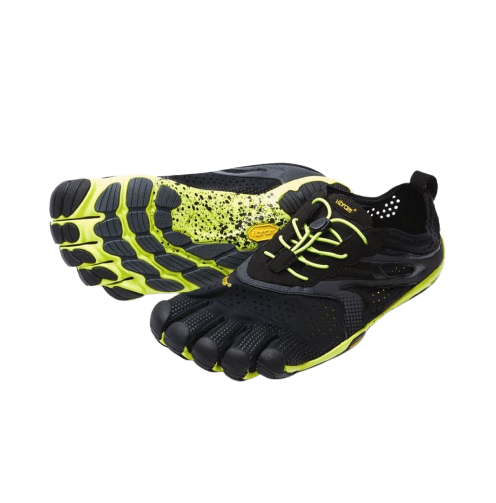
Vibram FiveFingers V-Run
The V-Run is Vibram's flagship road running toe shoe. Ultra-thin sole, individual toe pockets, and a breathable upper deliver the closest-to-barefoot running experience you can get with a shoe on.
Pros
- + Excellent ground feel for road running
- + Ultra-lightweight construction
- + Individual toe pockets improve grip and balance
- + Breathable mesh upper
Cons
- − Takes time to adapt to toe separation
- − Not ideal for rough trails
- − Sizing can be tricky, must measure carefully
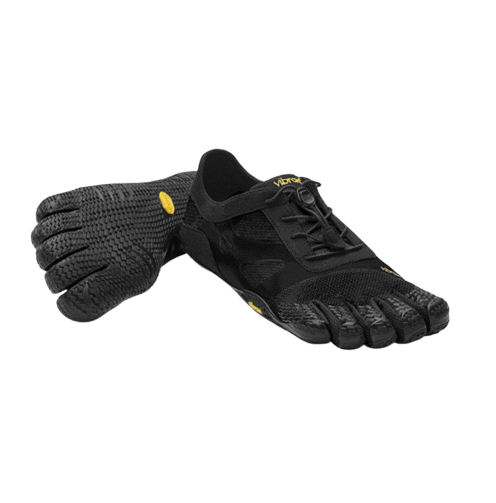
Vibram FiveFingers KSO EVO
The KSO EVO is Vibram's most versatile toe shoe, thin enough for yoga and gym work, durable enough for daily wear. The speed lacing system keeps it snug for any activity.
Pros
- + Versatile all-around toe shoe
- + Thin sole maximizes ground feel
- + Secure fit with speed lacing
- + Great for gym, yoga, and daily wear
Cons
- − Very minimal protection
- − Not ideal for long runs on pavement
- − Takes adjustment period
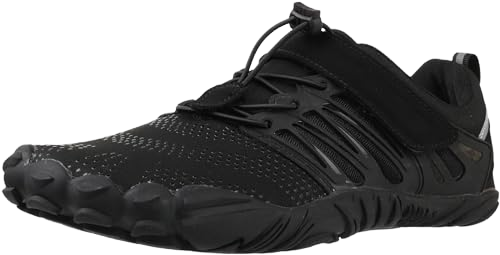
WHITIN Five Toe Minimalist Shoes
At under $40, WHITIN's five-toe shoes are the easiest way to try toe shoes without commitment. Build quality can't match Vibram, but for testing whether toe shoes work for you, they're unbeatable value.
Pros
- + Incredible value at under $40
- + Decent build quality for the price
- + Wide range of colors
- + Good intro to toe shoes
Cons
- − Materials less durable than Vibram
- − Toe fit less precise
- − Sole grip is mediocre
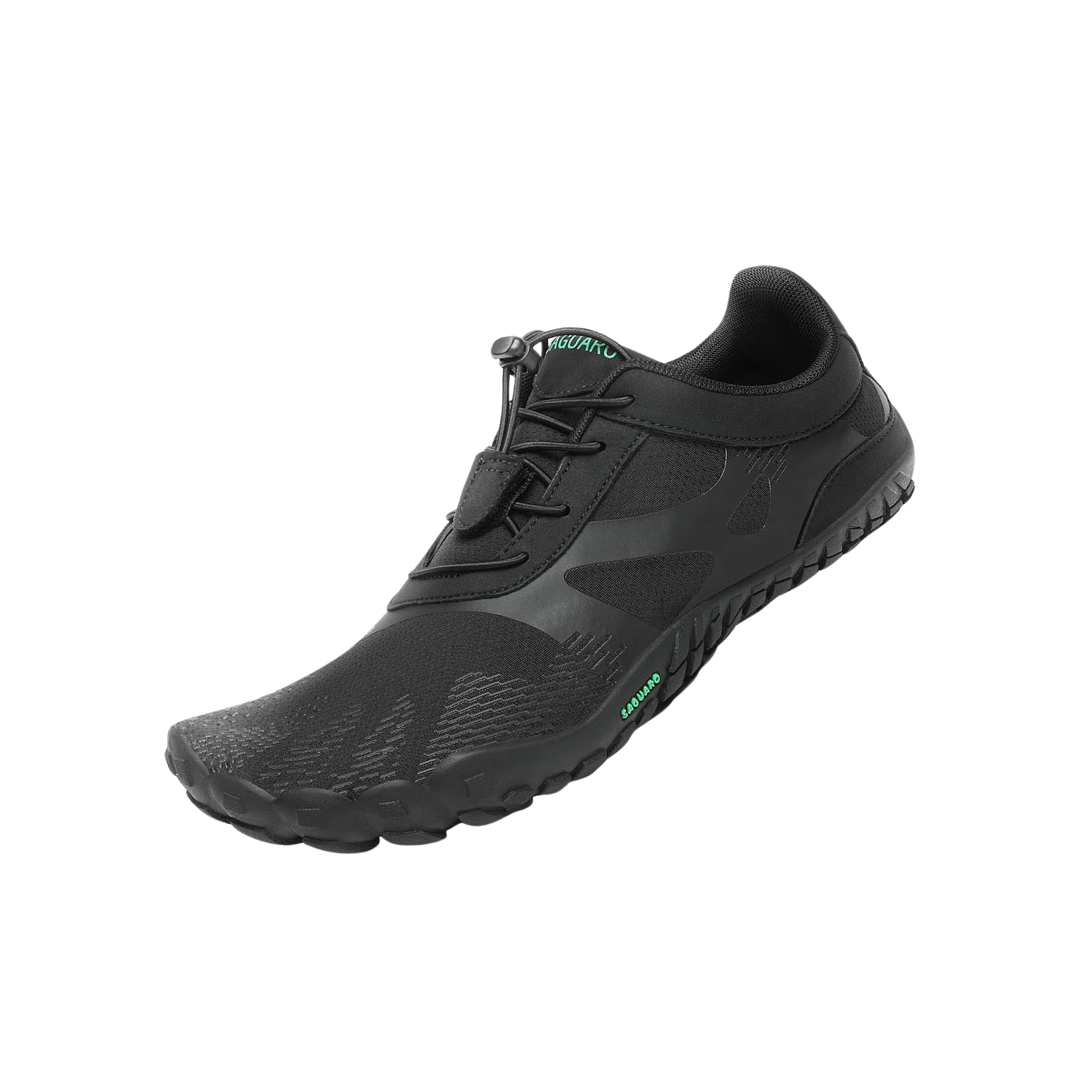
SAGUARO Five Finger Barefoot Shoes
SAGUARO's five-finger shoes are the cheapest way into toe shoes. They won't match Vibram on quality, but at $35 they're a zero-risk way to find out if individual toe pockets work for your feet.
Pros
- + Cheapest toe shoes available
- + Wide variety of colors
- + Decent for casual use
- + Easy to find on Amazon
Cons
- − Durability is limited
- − Toe compartments run small
- − Less breathable than Vibram
- − Sole grip inconsistent
Styling split toe shoes
Split toe shoes have gone from controversial to covetable. Here's how people wear them:
- Margiela Tabi boots + wide-leg trousers: The classic pairing. The split toe peeks out below the trouser hem. Minimal, architectural.
- Nike Air Rift + shorts or cropped pants: Casual, sporty, summer-ready. The mesh and split toe give a relaxed Y2K vibe.
- Jika-tabi + loose linen or workwear: Japanese-inspired minimalism. Pairs well with wide pants, indigo denim, or relaxed silhouettes.
- Tabi ballet flats + midi skirts or tailored pants: Feminine, surprising, and increasingly popular as a statement shoe.
The key to styling split toe shoes: let the shoe be the focal point. Keep the rest of the outfit simple. The split toe serves as an architectural visual anchor that pairs best with minimal garments.
FAQ
Are split toe shoes comfortable?
Yes, particularly tabi-style shoes built with wide anatomical lasts. The split allows the big toe to articulate independently, which most people adapt to within a couple of days. Traditional jika-tabi are lightweight and flexible, though their thin soles require adaptation if you are accustomed to thick foam cushioning.
Are split toe shoes good for your feet?
Generally yes. Giving the big toe independent space promotes natural alignment and can help with balance, push-off mechanics, and potentially bunion prevention. They're a step toward the foot health benefits that full toe shoes provide.
What socks do you wear with split toe shoes?
Tabi socks feature a matching two-way split to fit into divided footwear. They are widely available online for $5 to $15 per pair. Some people also wear thin regular socks in looser-fitting split toe boots, or go sockless.
Do split toe shoes help with bunions?
The split gives the big toe space to stay in its natural alignment rather than being pushed toward the second toe by a conventional shoe. While no shoe can reverse a bunion, split toe shoes may help prevent progression by reducing hallux valgus pressure. For maximum toe splay (the strongest bunion-prevention approach), five-finger shoes go further.
What's the difference between tabi and split toe shoes?
Tabi is the Japanese word for the split-toe design. "Split toe shoes" is the English general term. They refer to the same concept: footwear that separates the big toe from the others. Some people use "tabi" specifically for Japanese-style versions and "split toe" for Western fashion designs, but the terms are interchangeable.
Are Maison Margiela Tabi worth the price?
For high fashion, they represent an iconic silhouette with strong resale value. For foot health and ground feel, dedicated minimalist options or five-finger models offer greater functional benefit at a fraction of the cost. Margiela Tabi are primarily a design statement.
How do split toe shoes compare to toe shoes?
Split toe shoes separate 2 compartments (big toe vs rest). Toe shoes (like Vibram FiveFingers) separate all 5 toes individually. Toe shoes offer more toe freedom and foot health benefits; split toe shoes are more fashion-accepted and easier to adapt to. See our comparison table above.